Saturday, December 24, 2016
DETAILED PROOFS ON : Celebrating The Holidays of The Infidels !!!

By our honored Shaykh Ahmad Musa Jibril (hafidhUllah)
General proof on prohibiting celebrating the holidays of the Infidels:
a) Celebrating the holidays of the infidels is an innovation. These celebrations are not from within Islam, nor are they conduct of the salaf (sahabah). Therefore anything not established in Islam should not be followed, as this will lead to punishments, especially in area of Ibaddah.
Every single detail of ones life from birth to grave falls under one of the following categories “munkar (evil), mubaah (permissible), haraam (prohibited), mustahabb (encouraged) and waajib (obligatory).
Islam is complete, and we derive our total lifestyle from Islam that Allah has completed for us, we cannot add nor eliminate any teachings from this completed religion as the Prophet (sallah Allahu alayhi Wasalam) said, “nothing of what would bring you closer to the Jannah and further away from the fire but I have clarified for you.” [Musnad Ahmad]
As we will see not only is celebrating, and contributing by any means to the holidays of the kuffar an innovation to Islam but it is disobeying the explicit sayings forbidding it.
b) Celebrating the holidays of the infidels is an imitation of the kuffar. The Prophet (sallah Allahu alayhi Wasalam) in a plenty of ahadith prohibited imitating the infidels, he said, “Whomever imitates the kuffar is one of them.” [Narrated by Abu Dawoud 4/314 Hadith # 4031; Ahmad In Musnad 2/50; Ibn Tayymiyah in the Fatawa 25/331 said it is an authentic hadith; Ibn Hajar mentioned it in Fateh Albari 6/98; Alsuty Narrated it in Jami Sagheer and said its chain of authenticity is good. 1/590]
c) Muslims must differ in areas of similarities with non-Muslims.
Being different from the infidels is an important principle in Islam. Following the path of those cursed by Allah is not part of Islam.
There is a pattern of showing this important principle that one can clearly see through the Quran and Sunnah:
Kuffr of those who assist Kuffaar against Muslims!!!
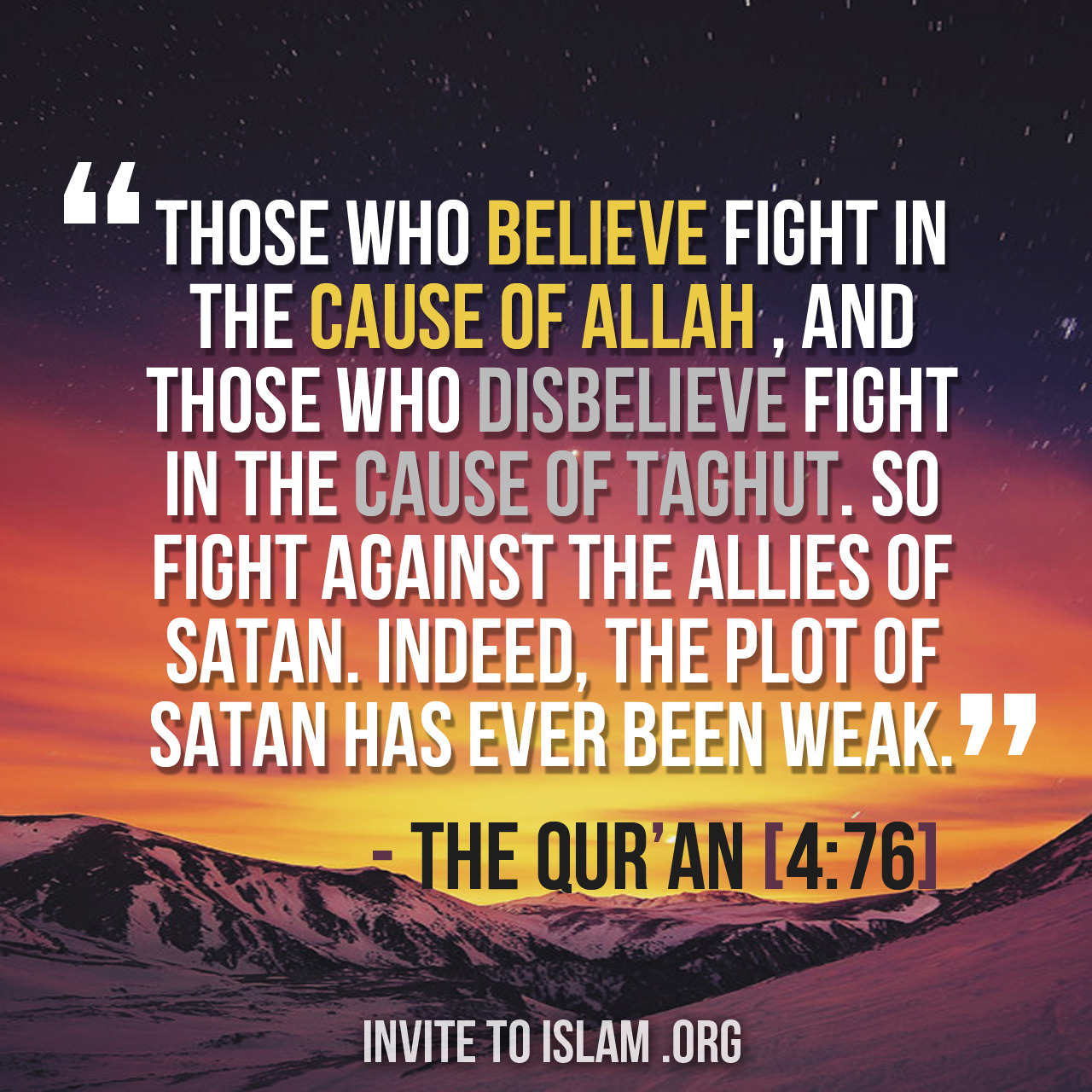
For Educational purpose only and to raise Intellectual and Political awareness!
All praise belongs to the Rabb of the A‘alameen, and may His Salaat and Salaam be upon the noble Prophets, the Messengers and upon our Prophet Muhammad, his family and his companions.
Whoever supports the disbelievers, Americans, the British, or anyone besides them against the Muslimeen in ‘Iraq, or elsewhere, by any means of support, then it will be considered assisting the disbelievers (Mudhaharah) against the believers. Such is disbelief and apostasy that takes one out of the Millah (Islam) as is evident from the book of Allah, the Sunnah of the Prophet (saws) and the consensus of the Scholars.
Evidences from the Qur’ān:
Allah says:
"O you who believe, take not the jews and the christians as awliya (friends, protectors, helpers, etc.), they are but awliya to one another. And if any amongst you takes them as awliya, then undoubtedly he is one of them. Verily, Allāh guides not the people who are the dhalimoon." [5:51]
"Those of the children of Israeel who went astray were cursed by the tongue of Dāwūd, and of ‘Īsā, son of Maryam. That was because they rebelled and used to transgress. They used not to prevent one another from wrongdoing that they did. How wretched was that which they were doing. You see many of them becoming allies of those who disbelieved. How wretched is that which they have put forth for themselves in that Allah has become angry with them, and in the punishment they will abide eternally." [5:78-80]
Evidences from the Sunnah:
Interrogation and Torture - 7th Century

Towards the end of the Prophet's (saws)
life, a certain man had started to claimed Prophethood in the city of
San’aa, Yemen. It was Al-Aswad al-‘Ansiyy, and with this claim of his,
he tightened his grip over his people and all had submitted except for a
few. Of those few was the righteous Taabi’ee Abu Muslim al-Khawlaani
(‘Abdullaah ibn Thuwab) who had refused to acknowledge al-Aswad’s
preposterous claim. As a result, al-Aswad ordered for a trench of
blazing fire and for Abu Muslim to be called up for interrogation. The
people gathered around the blazing fire and the scene that day had a
stark similarity to the scene at the time of Ibrahim (as) as he
faced his own interrogation at the hands of his own people.
Shackled and bound by fetters, Abu Muslim al-Khawlaani was brought in
to face al-Aswad, his comrades and the people of San’aa. The
conversation that took place between him and them showed not only the
bravery, strength and steadfastness of Abu Muslim, but also the defiance
of truth against falsehood and of Imaan against Kufraan:
Al-Aswad: Do you bear witness that Muhammad is the Messenger of Allah?
Abu Muslim: Yes, I bear witness that he is the servant and Messenger
of Allah, and that he is the leader of the Messengers and Seal of all
Prophets.
Al-Aswad: And do you bear witness that I am the Messenger of Allah?
Abu Muslim: Indeed, in my ears is deafness so I cannot hear you.
Al-Aswad: Then I will throw you in this fire!
Abu Muslim: If you throw me into this fire whose fuel is only wood,
then I will be saved from the Fire whose fuel is men and stones, over
which are appointed angels stern and severe, who flinch not from
executing the commands they receive from Allah, but do what they are
commanded.
The Rich who shows Gratitude !

Al Qady `Iyad said in Ikmal Al Mu`allim, commentary on the benefits taken from Sahih Muslim (2/ 546): Abul-Qasim ibn Abu Sufrah said: The previous Hadith
stresses the virtue of rich people when they perform what Allah
ordained on them then rich people shall have the virtue of extra
righteous deeds which they performed with their money which the poor
cannot perform. The poor only excel when the criterion is bodily actions
only which have no relation with money. This is apparent in the
Prophet's saying: (This is the virtue of Allah which He gives whomever He wills).
An-Nawawy said in Riyad As-Salihin
(3/ 430): "Chapter on the virtue of rich people who show gratitude;
they are the people who take money by lawful means and spend them in
their proper channels. Allah says: "As
for him who gives (in charity) and keeps his duty to Allâh and fears
Him, * And believes in Al-Husnâ. * We will make smooth for him the path
of ease (goodness)." [Al Layl:5-7]
Some of our Salaf's Quotes on Hereafter...

It is reported that Ya’lā bin ‘Ubayd said,
“We
entered upon Ibn Sūqah, who said: ‘O nephew, let me relate to you
something that will hopefully benefit you; for it benefited me. ‘Atā b.
Abī Rabāh once said to us:’” Those before you used to consider idle talk
to be anything other than the Book of Allāh, or the enjoining of
good, or the forbidding of evil, or speaking for the sake of your basic
living needs. Do you deny that there are recording angels appointed
over you? Sitting on your right and your left? Never is a word said
except there is an observer prepared to record? Are you not afraid
(ashamed) that your record of words and deeds be spread open only to
discover that there is nothing of the hereafter in it?"
[Al-Dhahabī, Siyar A’lām Al-Nubalā` 5:86]
It is reported that Mu’āwiyah b. Qurrah said:
"Those who will be taken to account most on the Day of Resurrection are those who were healthy and unoccupied."
[Abū Bakr Al-Daynūrī, Al-Mujālasah wa Jawāhir Al-’Ilm 4:152]
It is reported that ‘Alī ibn Abī Tālib said:
"Mention
what you will of the greatness of Allāh, but Allāh is greater than
anything you say. And mention what you will of the Fire, but it is more
severe than anything you say. And mention what you will of Paradise, but
it is better than anything you say."
[Abū Bakr Al-Daynūrī, Al-Mujālasah wa Jawāhir Al-’Ilm article 853]
It is reported that Al-Hasan Al-Basrī said:
"How strange it is that a people whose departure (from this world to the next) has been
announced, and whose predecessors have already departed, still play around!"
[Abū Bakr
Al-Daynūrī, Al-Mujālasah wa Jawāhir Al-’Ilm article 843]
It is reported that Al-Hasan Al-Basrī once said during the funeral of a man:
"May
Allāh have mercy on the man who works for the likes of this day; for
today you are able to do what these brothers of yours, the residents of
these graves, cannot do. So make full use of your health and free time
before the day of distress and accounts comes upon you."
[Ibn Abī Al-Dunyā, Dhamm Al-Dunyā article 53]
Saturday, December 10, 2016
They Celebrate the Prophet's (saws) Birth OR Death - Mawlid An-Nabi !?!
The purpose of this video is to raise awareness through evidence, it is
not to offend anyone but rather to bring us all together with the
correct understanding, may Allah guide us all and keep us on the
straight path-AMEEN YA RABB.
Arguments of Those who Celebrate the Mawlid !!!

1 - Their claim that this is veneration of the Prophet (saws): The response to that is that the way to venerate him is to obey him, do as he commanded and avoid that which he forbade, and to love him; he is not to be venerated through innovations, myths and sins. Celebrating his birthday is of this blameworthy type because it is a sin. The people who venerated the Prophet (saws) the most were the Sahabah, as 'Urwah ibn Mas'ud said to Quraysh, "O people, by Allah I have visited kings. I went to Caesar, Chosroes and the Negus, but by Allah I never saw a king whose companions venerated him as much as the companions of Muhammad venerated Muhammad (saws). By Allah, whenever he spat it never fell on the ground, it fell into into the hand of one his companions, then they wiped their faces and skins with it. If he instructed them to do something, they would hasten to do as he commanded. When he did wudu', they would almost fight over his water. When he spoke they would lower their voices in his presence; and they did not stare at him out of respect for him." [Al-Bukhari, 3/178, no. 2731, 2732; al-Fath, 5/388]. Yet despite this level of veneration, they never took the day of his birth as an 'Eid (festival). If that had been prescribed in Islam they would not have neglected to do that.
2 - Using as evidence the fact that many people in many countries do this: The response to that is that evidence consists of that which is proven from the Prophet (saws), and what is proven from the Prophet (saws) is that innovations are forbidden in general, and this is an innovation. What people do, if it goes against the evidence, does not prove anything, even if many of them do it. "And if you obey most of those on the earth, they will mislead you far away from Allah's path." [6:116] Nevertheless, in every age, praise be to Allah, there have always been those who denounce this bid'ah and state clearly that it is false. Those who persist in following it after the truth had been explained to them have no proof.
Among those who denounced the celebration of this occasion was Shaykhul-Islam ibn Taymiyah, in Iqtida' as-Sirat al-Mustaqim; Imam ash-Shatibi in al-'I'tisam; Ibn al-Haj in al-Madkhil; Shaykh Taj al-Din 'Ali ibn 'Umar al-Lakhami who wrote an entire book denouncing it; Shaykh Muhammad Bashir al-Sahsawani al-Hindi in his book Siyanah al-Insan; al-Sayyid Muhammad Rashid Rida wrote a separate essay on this topic; Shaykh Muhammad ibn Ibrahim alush-Shaykh wrote a separate essay on it; Shaykh 'Abdul-'Aziz ibn Baz; and others who are still writing and denouncing this bid'ah every year, at the time when this bid'ah is being done.
The most dangerous Bid’ah... IRJA !!!

Ibn Battah (d. 387AH) commented on al-Fudayl’s words by saying, “Indeed, we belong to Allāh and to Him we will return. We have reached that era, heard it, known most of it, and witnessed it. If a man whom Allāh has gifted with sound intellect and deep insight were to investigate, contemplate, and reflect upon the condition of Islām and its people – while following the most decisive path and the most guided way – it would become clear to him that the majority and prominent masses of the people have turned back upon their heels and backslidden. They have thereby deviated from the goal and turned away from the correct proof. Many people have ended up considering as fine what they used to consider as foul, considering as halāl what they used to consider as harām, and considering as good what they used to consider as evil. This – may Allāh have mercy upon you – is not from the character of the Muslimīn, nor the actions of those with insight about this Deen, nor the deeds of those believing in the Deen with certainty.” [Al-Ibānah al-Kubrā]
Ibn Battah also said, “The people in our era are like flocks of birds. They follow each other. If a man were to emerge and claim prophethood – despite them knowing that Rasūlullāh (saws) is the last of the Prophets – or claim godhood, he would find followers and supporters for this call.” [Al-Ibānah al-Kubrā]
Sa’īd Ibn Jubayr (d. 95AH) said, “The murjiah are the jews of the Qiblah.” [AsSunnah – ‘Abdullāh Ibn al-Imām Ahmad]
Others said, “Be wary of irjā for it is an aspect of christianity.” [Al-Lālikā’ī]
Status of the Pen in Islam...
Allah says:
“Nun, By the pen and what the (angels) write (in the Records of men).” [Al-Qalam:1]
“Read! And your Lord is the Most Generous, Who has taught (the writing) by the pen [the first person to write was Prophet Idrees (Enoch)], Has taught man that which he knew not.” [Al-Alaq:3-5]
"Neither did you (O Muhammad) read any book before it (this Qur’an), nor did you write any book (whatsoever) with your right hand. In that case, indeed, the followers of falsehood might have doubted." [Al-Ankabut:48]
“You were not with them , when they cast lots with their pens as to which of them should be charged with the care of Maryam.” [Al-Imran:44]
Allah swears by the Pen. The pen is one of Allah’s Signs and the first thing He created. Allah’s Qadr, legislation and revelation all are recorded by the pen. Furthermore, the pen has played a major role in preserving the sciences of Islam along with defining what is beneficial for the Muslims in this life and in the Hereafter.
The various leading roles of the Pen:
1: The Pen for the Qadr
This is the pen Allah used to write the destiny of creation. This pen is the highest in rank and the noblest of all pens.
2: The Pen for Revelation
This pen is used to record Allah’s words given to His Prophets and His Messengers, along with their companions. This pen passes Judgment on the World. The scholar serves this pen’s judgment to the people in power to execute its law. Each and every pen that recorded revelations serves the pen for the influential people. The Prophet (saws) ascended on the night of Isra to a place where he heard the pens squeaking. These pens are those that write whatever affairs Allah decides for the entire the World.
“Nun, By the pen and what the (angels) write (in the Records of men).” [Al-Qalam:1]
“Read! And your Lord is the Most Generous, Who has taught (the writing) by the pen [the first person to write was Prophet Idrees (Enoch)], Has taught man that which he knew not.” [Al-Alaq:3-5]
"Neither did you (O Muhammad) read any book before it (this Qur’an), nor did you write any book (whatsoever) with your right hand. In that case, indeed, the followers of falsehood might have doubted." [Al-Ankabut:48]
“You were not with them , when they cast lots with their pens as to which of them should be charged with the care of Maryam.” [Al-Imran:44]
Allah swears by the Pen. The pen is one of Allah’s Signs and the first thing He created. Allah’s Qadr, legislation and revelation all are recorded by the pen. Furthermore, the pen has played a major role in preserving the sciences of Islam along with defining what is beneficial for the Muslims in this life and in the Hereafter.
The various leading roles of the Pen:
1: The Pen for the Qadr
This is the pen Allah used to write the destiny of creation. This pen is the highest in rank and the noblest of all pens.
2: The Pen for Revelation
This pen is used to record Allah’s words given to His Prophets and His Messengers, along with their companions. This pen passes Judgment on the World. The scholar serves this pen’s judgment to the people in power to execute its law. Each and every pen that recorded revelations serves the pen for the influential people. The Prophet (saws) ascended on the night of Isra to a place where he heard the pens squeaking. These pens are those that write whatever affairs Allah decides for the entire the World.
Umm Salamah Hind bint Abi Umayyah (ra)

Umm Salamah Hind bint Abi Umayyah was married to the Prophet
(saws) in 4 AH at the age of twenty nine, after her first husband,
Abdullah ibn Abdul Asad, had died from the wounds he had received
while fighting at the battle of Uhud. Umm Salamah and Abdul Asad had
been among the first people to embrace Islam in the early days of the
Muslim community in Makkah. They had suffered at the hands of the
Quraish who had tried to force them to abandon their new faith, and
had been among the first group of Muslims to seek refuge under the
protection of the Negus in Abyssinia. When they had returned to
Makkah, believing that the situation of the Muslims had improved,
they had found instead that if anything it was worse. Rather than
return to Abyssinia, Abdul Asad and Umm Salamah had received the
Prophet's (saws) permission to immigrate to Madinah, but this proved
not to be as easy as they might have imagined.
In the words of Umm Salamah: "When
Abu Salamah (my husband) decided to leave for Madinah, he prepared a
camel for me, lifted me up onto it and put my son Salamah on my lap.
My husband then took the lead and went straight ahead without
stopping or waiting for anything. Before we were out of Makkah,
however, some men from my tribe, the Banu Mahkhzum, stopped us and
said to my husband: "Although you may be free to do what you
like with yourself, you have no power over your wife. She is our
daughter. Do you expect us to allow you to take her away from us?'
They then grabbed hold of him and snatched me away from him. Some men
from my husband's tribe, the Banu Abdul Asad, saw them taking both me
and my child and became hot with rage: "No, by Allah!' They
shouted. 'We shall not abandon the boy. He is our son and we have a
rightful claim over him.' So they took him by his arm and pulled him
away from me. Suddenly, in the space of a few minutes, I found myself
all alone. My husband headed out towards Madinah by himself; his
tribe had snatched away my son from me; and my own tribe had
overpowered me and forced me to stay with them. From the day that my
husband and my son were parted from me, I went out at noon every day
and sat at the spot where this tragedy had occurred. I would remember
those terrifying moments and weep until nightfall.
Friday, November 25, 2016
The man who succumbed to Temptation...
It is related that a group of people
were once seated in the company of Al-Hasan Al-Basri, when some men
passed by, dragging along with them a body of a dead man. When Al-Hasan
saw the dead man, a glint of instant recognition could be discerned in
his eyes, and he fell unconscious from the shock of some memory that had
just been rekindled.
When he regained consciousness, his companions asked him what was wrong with him.
He said: This man – referring to the dead man being dragged along on the ground – used to be one of the best worshipers and one of the most renowned ascetics (in the world) (renouncing all the temporary pleasures of this world because he was so busy and devoted to worship).
One day he left his home, intending to go to the Masjid to pray, but on the way, he saw a beautiful young Christian women, who became an immediate temptation to him.
When he proposed to her, she refused, saying; “I will not marry you until you become an adherent of my religion.”
He went on his way, but as time went on, he yearned for her continued to increase. He then succumbed to her wish and exited from the fold of (Islam) the religion of pure, unadulterated Monotheism.
When he regained consciousness, his companions asked him what was wrong with him.
He said: This man – referring to the dead man being dragged along on the ground – used to be one of the best worshipers and one of the most renowned ascetics (in the world) (renouncing all the temporary pleasures of this world because he was so busy and devoted to worship).
One day he left his home, intending to go to the Masjid to pray, but on the way, he saw a beautiful young Christian women, who became an immediate temptation to him.
When he proposed to her, she refused, saying; “I will not marry you until you become an adherent of my religion.”
He went on his way, but as time went on, he yearned for her continued to increase. He then succumbed to her wish and exited from the fold of (Islam) the religion of pure, unadulterated Monotheism.
Hukm on the Nusayriyyah !!!
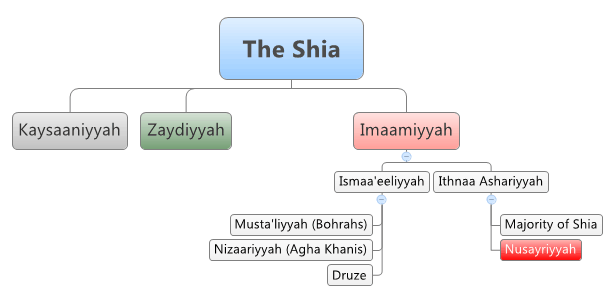
Shaykhul Islam Ibn Taymiyyah (rahimahUllah) was asked about the ruling upon the Nusayriyyah and the druze and answered:
“The druze and the Nusayriyyah are kuffaar according to the agreement of the Muslimeen. It is not permissible to eat what they slaughter nor marry their women. Rather, they cannot be acknowledged with Jizyah, for they are apostates from the Deen of Islam, not Muslimeen, nor jews, nor christians. They do not recognize the obligation of the Salaah, nor the obligation of the Ramadaan fast, nor the obligation of Hajj, nor the prohibition of what Allah and His Messenger (saws) have prohibited of dead animals, alcohol, and so on. And even if they manifest the shahadatayn alongside these tenets of creed, then they are kuffaar according to the agreement of the Muslimeen.
As for the druze, then they are the followers of Hashtakin Ad-Darzi who was one of the followers of Al-Hakim (the apostate ‘Ubaydi ruler). Al-Hakim sent him to the people of the valley of Taymullah Ibn Tha’labah and called them to believe in the godhood of Al-Hakim. They call him ‘Al-Bari Al-‘Allaam’ (The Creator, the All-Knowing) and swear by him. They are from the Isma’iliyyah who claim that Muhammad Ibn Ismā’īl abrogated the Shari’ah of Muhammad Ibn ‘Abdillah (saws). They are worse in kuffr than the extreme shi’ah. They claim that the world existed eternally and deny the obligations and prohibitions of Islam. They are from the batini qaramitah (those who claim the religion has secret meanings contradicting its apparent meanings) who are worse in kuffr than the jews, the christians, and the mushrik arabs. They ultimately strive to be philosophers upon the doctrine of Aristotle and his likes or the majoos. Their doctrine is a combination of the doctrines of the philosophers and the majoos. They hypocritically manifest as shi’ah.” [Majmu’ Fatawa]
“The druze and the Nusayriyyah are kuffaar according to the agreement of the Muslimeen. It is not permissible to eat what they slaughter nor marry their women. Rather, they cannot be acknowledged with Jizyah, for they are apostates from the Deen of Islam, not Muslimeen, nor jews, nor christians. They do not recognize the obligation of the Salaah, nor the obligation of the Ramadaan fast, nor the obligation of Hajj, nor the prohibition of what Allah and His Messenger (saws) have prohibited of dead animals, alcohol, and so on. And even if they manifest the shahadatayn alongside these tenets of creed, then they are kuffaar according to the agreement of the Muslimeen.
As for the druze, then they are the followers of Hashtakin Ad-Darzi who was one of the followers of Al-Hakim (the apostate ‘Ubaydi ruler). Al-Hakim sent him to the people of the valley of Taymullah Ibn Tha’labah and called them to believe in the godhood of Al-Hakim. They call him ‘Al-Bari Al-‘Allaam’ (The Creator, the All-Knowing) and swear by him. They are from the Isma’iliyyah who claim that Muhammad Ibn Ismā’īl abrogated the Shari’ah of Muhammad Ibn ‘Abdillah (saws). They are worse in kuffr than the extreme shi’ah. They claim that the world existed eternally and deny the obligations and prohibitions of Islam. They are from the batini qaramitah (those who claim the religion has secret meanings contradicting its apparent meanings) who are worse in kuffr than the jews, the christians, and the mushrik arabs. They ultimately strive to be philosophers upon the doctrine of Aristotle and his likes or the majoos. Their doctrine is a combination of the doctrines of the philosophers and the majoos. They hypocritically manifest as shi’ah.” [Majmu’ Fatawa]
What Subdues Trials and Tribulations?

The foundation of triumph over hardship is patience. Allah has said in the Qur’an: “Give glad tidings to those who are patient, who, when disaster strikes them, say, ‘Indeed, we belong to Allah, and indeed to Him we will return.” Those are the ones upon whom are blessings from their Lord and mercy. And it is those who are the rightly guided.” [2:155-157]
Rasulullah (saws) also said with regards to patience: “Some people from the Ansar asked Allah's Apostle (to give them something) and he gave to everyone of them, who asked him, until all that he had was finished. When everything was finished and he had spent all that was in his hand, he said to them, '"(Know) that if I have any wealth, I will not withhold it from you (to keep for somebody else); And (know) that he who refrains from begging others (or doing prohibited deeds), Allah will make him contented and not in need of others; and he who remains patient, Allah will bestow patience upon him, and he who is satisfied with what he has, Allah will make him self-sufficient. And there is no gift better and vast (you may be given) than patience.” [Sahih Bukhari: Volume 8, Book 76, Number 477/ Narrated Abu Said]
In times of difficulties the Muslim must remind the self that in reality he/she, one's family and one's wealth belong ONLY to Allah. The slave is merely borrowing these from Allah. When Allah takes it back, the situation is comparable to the owner taking back one's property from the one who borrowed it from him. The Muslim must also recall that our journey as servants of Allah is to depart from this world, and to remember that we are simply returning to Allah, our Lord and guardian in truth.
Summoning the spirits of the Dead : A Contemporary Experience

A modern day experience
This experiment took place with the
author Ahmad Izzuddin al-Bayanuni. He mentioned it in his book Kitab
al-Iman bil-Malaaika. I eagerly decided to quote the complete text of
what he wrote:
The people of the East and the West have
preoccupied themselves with the claim of making the spirits appear.
There have been many articles written about it, written in different
languages, published in Arabic as well as non-Arabic magazines. Books
have been written about it. Much research has been done lately on this
topic. Many experiments have been performed. After all of that, the
intelligent people have concluded that the raising of the spirits is
nothing but falsehood and forgery, a call to disbelief and wickedness.
What they claim to be the appearing of
the spirits of people who have passed away is nothing but fakery and
forgery. The spirits that appear are nothing but devils that are playing
with and duping humans. In reality, there is no one who is capable of
making the spirits appear. After the spirit leaves the body it goes to
reside in the realm called al-Barzakh which is the interval between this
worldly life and the life of the hereafter. Therein the person is
either in bounties or punishment. They are preoccupied there with a
great affair which would prevent them from appearing before the humans.
I [al-Bayanuni] was called to such an act
of these spiritualists. And I experienced my own lengthy experience.
This experience made it clear to me that it is nothing but falsehood,
forgery and deception. It is just the playing of the devils. They
present that to the people to mislead them and to deceive them and to
make humans follow them.
The beginning of the experience
I had known for more than ten years of a
person who claimed that he was using the jinn to do good deeds in the
service of mankind. And that was done through a person who was a medium.
He claimed that he achieved that through recitations and lengthy
invocations which took up a great deal of time. He was instructed in
thorough incantations by someone who claimed he was knowledgeable in
that area. The medium came to me one day telling me that so and so of
the jinn had called for me to discuss something important and there was a
great matter in store for me.
I went to the appointment, trusting in Allah and very happy about it, in order to learn new information through this experience.
Tuesday, November 15, 2016
Those who abstain from Takfeer and warn from that...
Answer: Wa ‘alaykum salam wa rahmatullahi wa barakatuhu, to proceed:
The discussion regarding the guidelines of Takfeer has very long details attached to it, however I’ll summarize that for you.
So from the most important guidelines of Takfeer are three matters:
1. That there is established proof on the reason behind performing Takfeer.
2. That the action of the individual for this reason behind performing Takfeer is clear, and doesn’t have any doubtful possibilities in it.
3. Impediments/Preventions [of Takfeer] are removed, and it is four [things]: Coercion, Ignorance, Interpretation and Mistake.
And every impediment from these impediments [of Takfeer] have details attached to it. And everyone who has knowledge in an issue has the right to make a judgement in it, even if he was from the laymen, and that is like the one who knows that Tarik As-Salaah [Abandoner of Salaah] is a kaafir, then he sees someone who doesn’t pray, then he has the right to make Takfeer upon him, and also like the one who hears someone mocking the Deen, and similar to that. But as for performing Takfeer upon Specific Individuals:
Then know, may Allah bless you, that the Madhab of irjaa in this time of ours deeply penetrated into those who affiliate themselves to the Salafiyyah, so they became two types:
The discussion regarding the guidelines of Takfeer has very long details attached to it, however I’ll summarize that for you.
So from the most important guidelines of Takfeer are three matters:
1. That there is established proof on the reason behind performing Takfeer.
2. That the action of the individual for this reason behind performing Takfeer is clear, and doesn’t have any doubtful possibilities in it.
3. Impediments/Preventions [of Takfeer] are removed, and it is four [things]: Coercion, Ignorance, Interpretation and Mistake.
And every impediment from these impediments [of Takfeer] have details attached to it. And everyone who has knowledge in an issue has the right to make a judgement in it, even if he was from the laymen, and that is like the one who knows that Tarik As-Salaah [Abandoner of Salaah] is a kaafir, then he sees someone who doesn’t pray, then he has the right to make Takfeer upon him, and also like the one who hears someone mocking the Deen, and similar to that. But as for performing Takfeer upon Specific Individuals:
Then know, may Allah bless you, that the Madhab of irjaa in this time of ours deeply penetrated into those who affiliate themselves to the Salafiyyah, so they became two types:
Umm Waraqah (ra), the Martyr
Umm Waraqah was one of the Ansari female Companions. She was of high .and noble lineage and she was wealthy. She embraced Islam and believed in the words of her Lord. She devoted her attention to the Noble Qur'an reading it, memorizing it and following its teachings and rules. The Qur'an became her main concern and all aspects of her private and public life revolved around it. She attained a high and commendable status in this aspect.
When the Messenger of Allah (saws) called upon the Muslims to go to Badr to intercept a caravan of Quraysh led by Abu Sufiyan, Sakhr ibn Harb, on its way back from Syria and that was carrying commercial commodities, that Allah might transfer it to them, especially the emigrants from whom the Quraysh seized their houses, properties and monies, Umm Waraqah wanted to go out with the Prophet (saws). She explained her wish and her intention.
She came to him and said: "O' Messenger of Allah (saws) allow me to go out with you so that I could nurse the sick ones among your Companions, and perhaps, Allah will bless me with martyrdom."
The Messenger of Allah (saws) replied her, "Stay in your house, Allah will bless you with martyrdom."
From that day onward, she was called 'the martyr'.
Umm Waraqah was in fact influenced by the concept of martyrdom, and that it is a contract of allegiance between the Creator and His believing servants. Allah says:
“Verily, Allah has purchased of the believers their lives and their properties for [the price] that theirs shall be the Paradise. They fight in Allah's Cause, so they kill [others] and are killed. It is a promise in truth which is binding on Him in the Tawrat and the Injeel and the Qur'an. And who is truer to his covenant than Allah? Then rejoice in the bargain which you have concluded. That is the supreme success.” [9:111]
"The Mug Shot that Spoke His Legacy" !
We go
back in history to 1862 where a young boy of a poor household was
born in a town controlled by the Uthmany Khilafa. This young man was
brought under the care and tutelage of one of the Shuyookh in his
home town when he was at the ripe age of 16 after the death of his
father.
He eventually developed a lifestyle of not sleeping more than 3 hours every night in order to get up to pray to Allah at the last third of the night and recite Qur'an until fajr. He memorized the Qur'an (as all knowledgeable people begin their lives) eventually, and was known to have finished his revisions in its entirety every seven days, regardless of the sufferings he encountered in his life.
His courage and wisdom was pronounced, and was an example for people to follow. This was evident on one of his caravan trails to Sudan as a young man. A lion had deterred the people from entering a particular path. Caravans were veered else where for fear of this lion. To distract this lion, people would resort giving it one of their camels, a most prized possession, so they could pass safely. He learned of this lion during the journey, where upon he consequently took it upon himself to face this crisis head on. Unlike other men in the caravan who were dumbstruck by the situation, he carried his shot gun, rode his horse and went after the lion. He came back with the lion's head much to everyone's surprise and due gratitude. This earned him the name "Lion of Cyrenaica."
An upbringing of courage and upright religiosity had a massive effect on him. His character would not only change the course of his tribe, country and people, but also the world of Muslims in the Post Colonial Era.
10 ways to avoid Marrying the wrong Person

This is long... but worth a read and a wonderful resource for
working out what questions to ask at a level that really helps you
know the person you are marrying... I think the real question to ask
is:
Would you want to be married to this man or this woman for all eternity..? because Marriage is indeed a reality.
Would you want to be married to this man or this woman for all eternity..? because Marriage is indeed a reality.
There is a right way and a wrong way to
get to know someone for marriage. The wrong way is to get caught up
in the excitement and nuance of a budding relationship and in the
process completely forget to ask the critical questions that help
determine compatibility. One of the biggest mistakes that many young
Muslims make is rushing into marriage without properly and thoroughly
getting to know someone.
A common myth is that the duration of a courtship is an accurate enough measure of how compatible two people are. The logic follows that the longer you speak with someone, the better you will know them. The problem with that premise is that no consideration is given to how that time is spent.
Increasingly, young Muslim couples are engaging in “halal dating,” which is basically socializing with each other in the company of friends and/or family. This includes going out to dinner, watching a movie, playing some sport or other leisure activity, etc. Depending on the family or culture, conversations are either minimal & chaperoned or worse, unrestricted and unsupervised. When you consider these limitations it makes one wonder when exactly, if ever at all, would the critical conversations take place? Unfortunately, for many, the answer is never and they live to suffer the consequences. If you or someone you know is in the “getting to know someone” phase, the following guide offers advice on exactly what to look for and avoid:
A common myth is that the duration of a courtship is an accurate enough measure of how compatible two people are. The logic follows that the longer you speak with someone, the better you will know them. The problem with that premise is that no consideration is given to how that time is spent.
Increasingly, young Muslim couples are engaging in “halal dating,” which is basically socializing with each other in the company of friends and/or family. This includes going out to dinner, watching a movie, playing some sport or other leisure activity, etc. Depending on the family or culture, conversations are either minimal & chaperoned or worse, unrestricted and unsupervised. When you consider these limitations it makes one wonder when exactly, if ever at all, would the critical conversations take place? Unfortunately, for many, the answer is never and they live to suffer the consequences. If you or someone you know is in the “getting to know someone” phase, the following guide offers advice on exactly what to look for and avoid:
Seeking Truth !
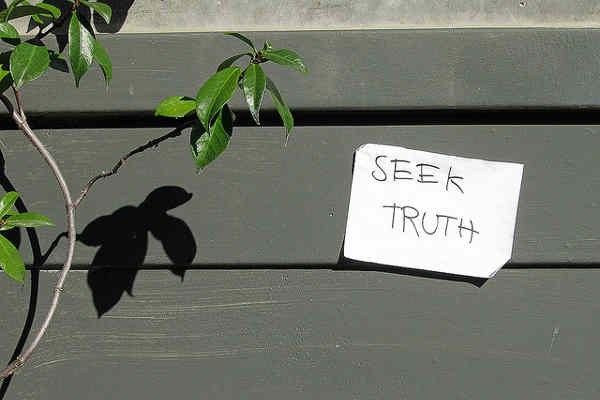
It is fitrah (innately natural) for the human beings who live on the surface of this God's earth, be it male or female, the noble or the lower class, the rulers or the ruled, the rich or the poor, to like to find truth. The truth is something good and honorable, which has to be possessed and fought for, so that with that truth mankind will live honorably on this earth, and be safe where ever they are, especially in the Akhira.
The truth is not two, not three, not ten, etc. The truth is only one. Truth is the one that comes from Allah, conveyed to the Rasuls (Messengers) especially the last Rasul i.e. Rasulullah Muhammad (pbuh). Allah has told us in the Qur'an,Al-Baqarah, verse 147:
"The Truth is from thy Lord; so be not at all in doubt."
Whatever is not from Allah is not truth even though some people claim that it is truth. What does not come from Allah is falsehood, even though it looks beautiful in the sight of the eyes. It is the truth that is from Allah carried by the Rasuls that we must find, obtain and practice. Then, we must strive for the truth, because it is the truth from Allah that makes mankind honorable on this earth and honorable in the Akhirah.
However, we have been left by Rasulullah (pbuh) since more or less 14 centuries ago. That is such a very long time, which had gone through many different issues, conditions and events. It had gone through the highs and lows, the ups and downs, the rise and the decline. So, for the ummah in these end times, which include ourselves, it is difficult to find truth. Let alone to possess and struggle for the truth. Although the truth is already in Al-Qur'anul Kareem and interpreted through the hadiths of the Prophet, those are only in the forms of knowledge and theories, not in the forms of actions or attitudes.
ARTICLE: From the US army to al-Shabaab !
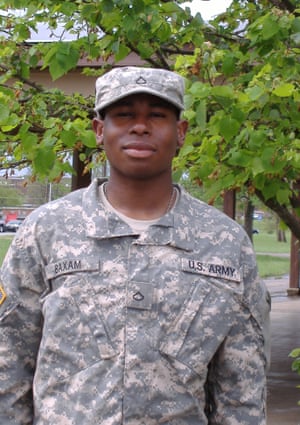
Baxam was far from home, spoke no local language and knew little about the region he was traveling through. If he were successful in reaching southern Somalia, his destination, things would almost certainly get worse for him: the war-torn country, where he planned to live according to his faith, remains one of the most inhospitable and perilous on Earth.
Yet none of that flustered him. All he wanted was to keep on moving towards the border. Find it, cross it and begin a new, better, devout life.
Baxam, 24 at the time, had thrown to the winds his comfortable existence in Laurel, Maryland, where he worked for a TV services company. In December 2011 he cashed in his thrift savings plan account (all $3,613.38 of it), gave $1,000 of that to an acquaintance in need, and with the rest bought himself a ticket to Nairobi. He had decided to set out on a hijrah, a migration to a true Islamic land, as he was instructed to do in the Qu’ran.
To say that this was all new to Baxam would be an understatement. A black American raised Catholic who had recently discharged himself from the US army after four years of service, he grew up with no connection to the Muslim faith. But five months before his trip, he went through a dramatic and sudden conversion after stumbling on a religious website.
Barely half a year later, he was making his way north through Kenya into the vast unknown.
As he travelled, Baxam kept his head down, stopping merely to eat and pray at mosques. He had good reason to be careful: he was heading towards one of the world’s most anarchic conflict zones in a country that had been in the throes of an extreme Islamist insurgency for several years.
Once inside Somalia, he planned to live under al-Shabaab – a group designated by Washington as a terrorist organisation which practices a very strict form of Islam under the religious law of sharia.
The stakes were high. US and Kenyan authorities worked closely together to intercept any movement across the border from al-Shabaab members, and Baxam had a taste of those security efforts as he sat on the bus going north. He later told the FBI there were posters all along the route telling people to contact police should they see anyone acting strangely. He must have looked suspicious himself, he said, given what was about to happen.
Soon after the bus pulled out, a man boarded and gently began asking Baxam questions. Where was he going? Did he speak the local dialect? Was there family nearby?
Baxam thought to himself: I’m in luck, here’s someone who wants to help me. It didn’t quite turn out like that. Not long after, the bus was surrounded by Kenyan police who swarmed onboard and took him away on suspicion of terrorism.
Sunday, October 30, 2016
HALLOWEEN : 31st Oct - DAY Of TRICK Or SHIRK !?!

As Muslims who are firm believers in the Day of Judgement and responsible guardians of our children, it is important to take all necessary steps to safeguard ourselves and children from any practices that will lead to Hellfire, a punishment which is seventy times hotter than the fires of this world. Allah said,
“O you who believe! save yourselves and your families a Fire (Hell) whose fuel is men and stones..” [66:6]
Before we encourage our children or ourselves to participate in the Halloween celebrations we must know what does Halloween stand for, and what effect will it have on our deeds on the Day when we will stand before Allah, giving an account for every single deed we do in our lives.
Halloween is a mixture of Paganistic (idol worshippers) and Christian belief and practice. The Idol worshippers believed that during the night of the 31st of October the gods would play tricks/pranks on their worshipers that would bring danger and cause fear on them. To be safeguarded from the mischief of these gods, the worshippers would offer treats to their gods in the form sacrifices, food, gifts etc hence the notion “Trick or Treat”. In current time children as well as adults dress up as creatures of the evil, scaring people (trick) unless they give a sacrifice (i.e. a treat). For the Christians Halloween is a celebration of all the Saints that have passed away or were martyred/killed in the path of serving and establishing Christianity. Christians would spend the night before (31st October) in holding all night Vigils.
To summarize Halloween is: